
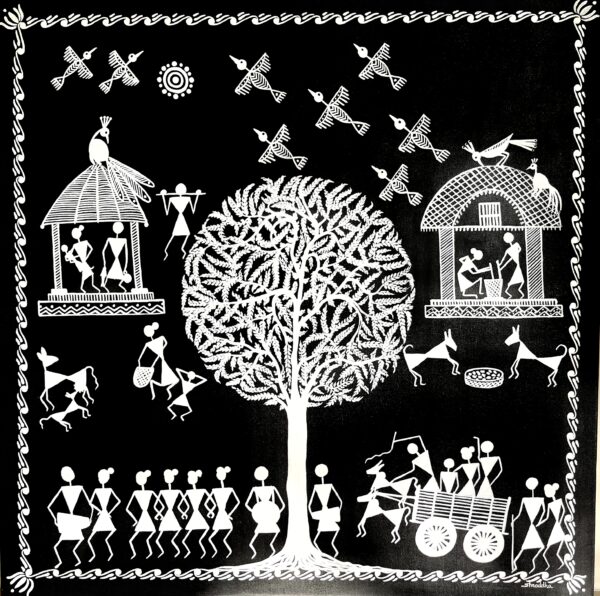
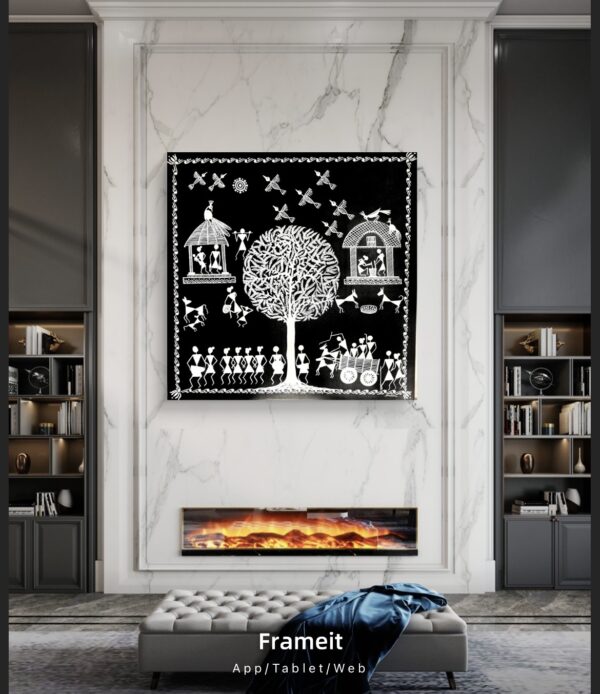


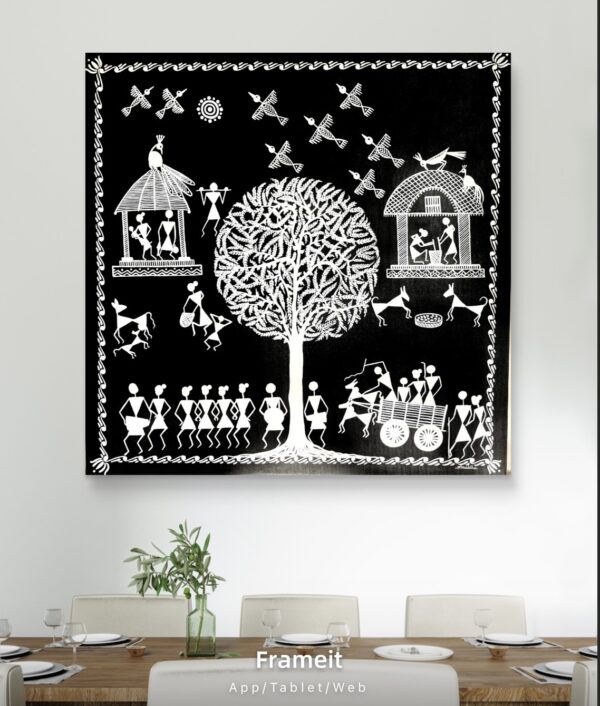





The painting presents a striking example of Warli Art, executed in white paint on a deep black canvas. The stark contrast between the monochrome palette immediately draws the viewer attention, allowing the intricate details of tribal life to stand out with clarity and rhythm. True to traditional Warli style, the figures are true to the traditional Warli style, the figures are composed of simple geometric forms – circles, triangles and lines -Yet they come together to create a lively and meaningful narrative.
The artwork vividly depicts various aspects of tribal life, including daily activities, communal gatherings and a close relationship with nature. scenes of farming, hunting dancing and celebration are woven seamlessly across the canvas, reflecting a harmonious and self-sustained way of living. The repetitive patterns and circular compositions, often seen in the depiction of dance, symbolize unity , continuity and the cyclical nature of life.
Despite the simplicity, the painting carries deep cultural significance. It not only captures the essence of tribal community`s traditions and values but also conveys a sense of balance between humas and their environment. The use of white on black enhances the timeless quality of the piece, making it both visually compelling and culturally evocative. Overall, the painting serves as a powerful expression of indigenous identity, storytelling and artistic heritage.


Reviews
There are no reviews yet.